Services

CT Scan (Computed Tomography) Advanced Diagnostic Imaging at Akumin

Last Updated: March 2026

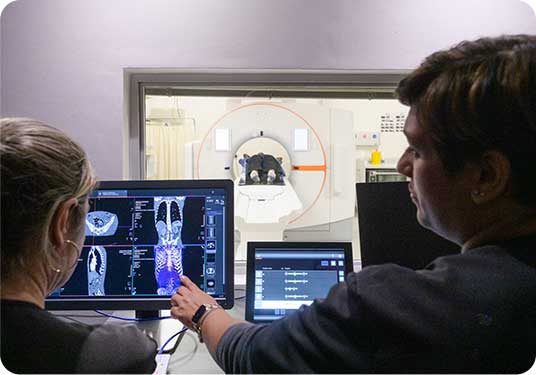
A CT scan (Computed Tomography) is a widely used diagnostic imaging procedure that combines advanced X-ray technology with sophisticated computer processing to generate detailed cross-sectional images of the body. These images provide precise visualization of organs, bones, blood vessels, and soft tissues, supporting accurate evaluation of injury, disease, and structural abnormalities.

CT imaging plays a critical role in modern diagnostic care by delivering fast, high-resolution results that inform clinical decision-making and treatment planning. Advanced imaging technology is designed to optimize image clarity while maintaining appropriate safety standards, helping ensure reliable, clinically actionable findings.
CT scan

What Is a CT Scan and How Does It Work?

Computed Tomography (CT) imaging captures detailed cross-sectional views of the body using advanced X-ray technology and sophisticated computer processing. By acquiring multiple images from different angles, CT technology reconstructs precise “slice” views that allow physicians to evaluate internal structures with clarity beyond what a standard X-ray can provide.

CT imaging is widely used across a broad range of clinical scenarios, from evaluating injury and acute symptoms to supporting diagnosis and treatment planning. Its speed and diagnostic precision make it a foundational tool in modern medical imaging.

Computed Tomography (CT) Advantages

CT’s high-resolution imaging supports accurate, confident diagnosis. It can reveal subtle fractures, small tumors, internal bleeding, infections, and vascular abnormalities that may not be visible on standard X-rays. The ability to reformat images in multiple planes and generate 3D reconstructions allows clinicians to examine anatomy from different perspectives, improving surgical planning and treatment strategy. These are core answers to the question, what are the benefits of CT scans, and why they are chosen for complex cases.

Speed is a major advantage. In emergencies, CT can quickly evaluate stroke, traumatic brain injury, pulmonary embolism, aortic disease, appendicitis, and internal bleeding. Rapid image acquisition shortens time to diagnosis and enables timely interventions that can be lifesaving. When comparing the benefits of computed tomography to other modalities, this speed often makes the difference in urgent settings.

CT scans are non-invasive and generally comfortable. Most exams take only a few minutes and may involve simple breath holds. When contrast is needed, it is usually administered through a small IV. The quick, non-invasive experience helps reduce anxiety, minimizes time in the imaging suite, and supports same-day clinical decisions. These computed tomography advantages contribute to both patient comfort and clinical efficiency.

Why Your Physician May Recommend a CT Scan

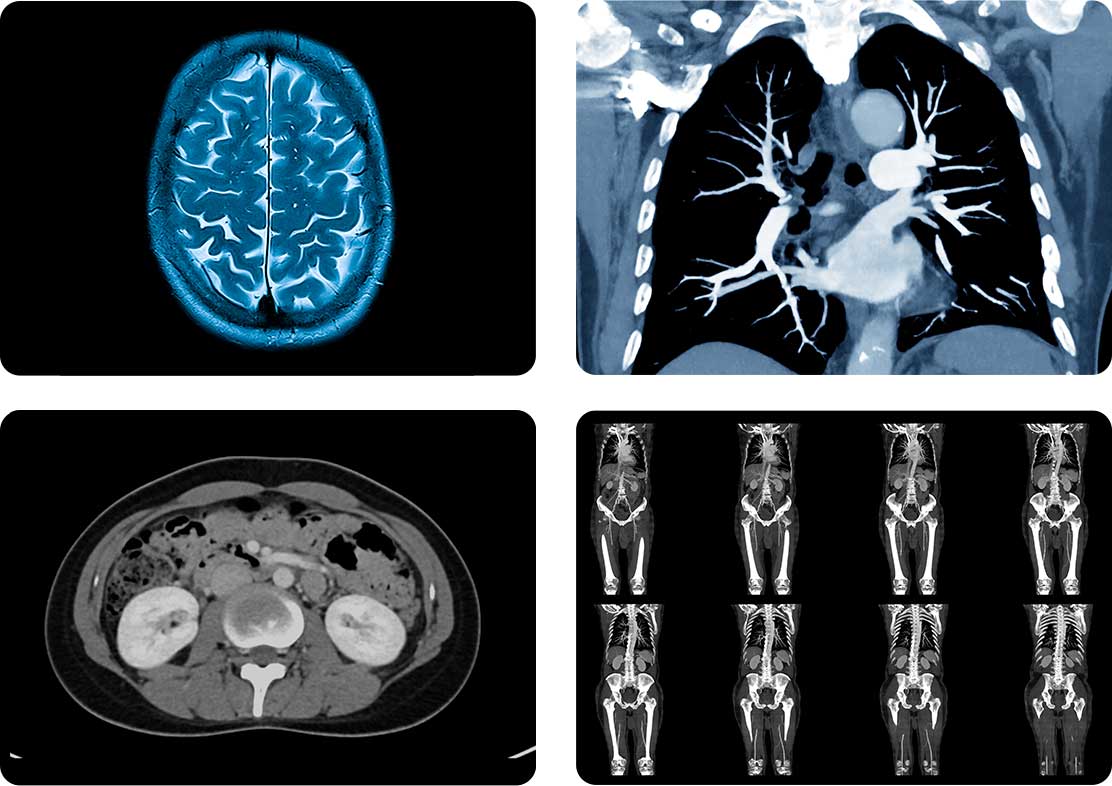
CT imaging helps diagnose and monitor a wide range of conditions, see below.

CT scan images

Common CT Applications
Head and Neck Stroke evaluation, traumatic injury, sinus disease, tumor assessment
Chest Pneumonia, pulmonary embolism, nodules, aortic conditions and Cardiovascular disease
Abdomen/Pelvis Appendicitis, kidney stones, bowel obstruction, liver and pancreatic disease
Musculoskeletal Fractures, preoperative planning, bone and joint abnormalities
Oncology Detection, staging, treatment monitoring, image-guided biopsy

With the ability to capture highly detailed images in seconds, CT is frequently used when timely clinical decision-making is essential. A variety of CT services, including Cardiac Exams such as coronary CTA and Calcium Scoring, as well as, Lung Cancer Screening and oncology imaging, can help detect and evaluate a wide range of conditions.

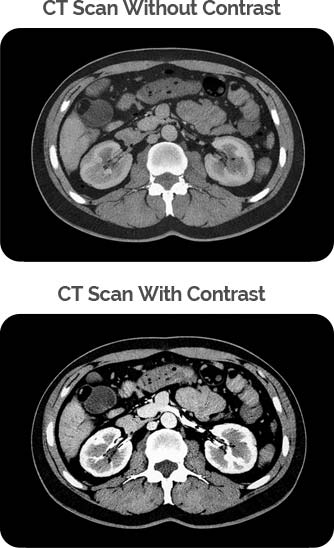
Contrast free CT vs with contrast

CT Scan With Contrast

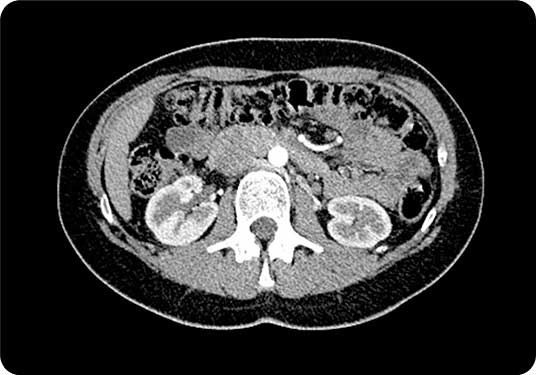
Some CT scans are performed with contrast to enhance visualization of blood vessels, organs, and specific tissue structures. Contrast allows for greater clarity in certain clinical scenarios, supporting more precise evaluation and diagnostic confidence.

When contrast is part of the study, additional screening may be required to ensure appropriateness and safety. Details are reviewed prior to the exam, and guidance is provided based on the specific type of scan being performed.

Preparing for a CT Scan

Preparation requirements vary by CT study type and imaging protocol.

Prior to the exam, instructions specific to the ordered study are provided. Metal objects must be removed. Depending on the protocol, intravenous or oral contrast may be administered to optimize visualization of vascular structures and soft tissues. Positioning and breath-hold instructions are provided at the time of imaging to support image quality.

Dietary and medication guidance may differ depending on whether contrast is required. Certain contrast-enhanced studies require a temporary fasting period. Patients taking medications such as metformin, or those with reduced kidney function, may require additional review prior to contrast administration. Medication lists and allergy history, including prior contrast reactions, should be disclosed before imaging.

Study-specific preparation is determined by the imaging protocol and clinical indication

Learn about preparation steps for each of CT scan types.

CT scan radiation safety

CT Scan Radiation Safety

CT imaging uses ionizing radiation. Radiation dose is managed in accordance with the principle of keeping exposure as low as reasonably achievable while maintaining diagnostic image quality. The decision to perform a CT study is based on clinical indication and a determination that the diagnostic value outweighs potential risk. In certain populations, including pediatric and pregnant patients, alternative imaging modalities may be considered when clinically appropriate.

Modern CT systems incorporate dose optimization technologies such as automatic exposure control, iterative reconstruction, and protocol-based modulation. Imaging protocols are tailored to the clinical question and patient characteristics to support appropriate radiation management. When contrast administration is required, renal function assessment and allergy screening are conducted in accordance with established guidelines. Protocols are in place to manage contrast-related reactions.

Clinical discussions regarding exam necessity, alternative imaging options, and prior imaging history occur between the patient and the ordering provider. Documentation of prior studies supports avoidance of unnecessary duplicate imaging. Relevant medical history, including prior contrast reactions, renal impairment, or pregnancy status, should be disclosed prior to imaging to ensure adherence to established safety measures.


Frequently Asked Questions (FAQS)

How long does a CT scan take?

Most CT scans take between 10 and 30 minutes. The actual scan itself is often completed in just a few minutes, but preparation and positioning may add additional time. More complex studies may take slightly longer.

What does a CT scan show?

Yes, CT scans use a controlled amount of radiation to create detailed images. Modern CT technology is designed to use the lowest radiation dose necessary while maintaining high image quality. Your physician recommends a CT scan only when the diagnostic benefits outweigh potential risks.

Does a CT scan use radiation?

Yes, CT scans use a controlled amount of radiation to create detailed images. Modern CT technology is designed to use the lowest radiation dose necessary while maintaining high image quality. Your physician recommends a CT scan only when the diagnostic benefits outweigh potential risks.

Do I need to prepare for a CT scan?

Preparation depends on the type of CT scan being performed. If contrast material is required, you may need to avoid eating for several hours beforehand. Your care team will provide specific preparation instructions prior to your appointment.

What is a CT scan with contrast?

A CT scan with contrast uses a special dye, given orally or through an IV, to improve visibility of blood vessels, organs, and certain tissues. Contrast-enhanced CT scans can help physicians see abnormalities more clearly and improve diagnostic accuracy.

Is a CT scan painful?

A CT scan itself is painless. You may feel slight pressure from the table or positioning devices. If contrast is used, you might briefly experience a warm sensation or a metallic taste, which typically resolves quickly.

How much does a CT scan cost?

The cost of a CT scan varies depending on the type of exam, whether contrast is used, and your insurance coverage. Most CT scans require a physician referral. Contact your local Akumin imaging center to verify insurance coverage and estimated costs.

When will I receive my CT scan results?

After your CT scan, a board-certified radiologist reviews the images and prepares a report. Results are typically sent to your referring physician within 24 to 48 hours, depending on clinical urgency. Your physician will discuss findings and next steps with you.

Request an Appointment

Complete the form below to request an appointment. Kindly note that not every procedure is available at all of our locations. To search for all procedures available in your area visit our locations page.

Request An
Appointment

Online or over the phone, we make it easy to schedule your exam

Book now ›

Find Your
Center

Now we’re closer than ever with 100+ fixed-site centers nationwide

Locate now ›

Contact Us For
Medical Questions

Speak with our clinical team about CT procedures, prep, and more

Contact now ›