How AI Is Changing the Conversation Around Breast Cancer Screening
Oct 8, 2026
Every October, Breast Cancer Awareness Month brings an important reminder: early detection saves lives. For decades, we’ve seen remarkable advances in breast imaging, treatment options, clinical research, and technology that have helped clinicians detect cancer earlier and with greater accuracy. Yet despite that progress, one challenge remains.
Too many patients still are not getting screened.
That’s why I believe we need to start asking a different question.
For years, much of the conversation has centered on how we can develop better technologies to detect cancer. That’s an important question, and one that has led to meaningful advancements. But today, we should also be asking something else:
How can we use innovation to help more patients benefit from those advancements?
Because technology alone doesn’t change outcomes. Technology reaches its full potential only when patients have access to it, trust it, and ultimately receive the care it makes possible.
Moving Beyond the Image
Artificial intelligence is one of the most significant developments in breast imaging in recent years, and understandably, it has generated a great deal of discussion.
Like many technological advancements in healthcare, AI is often viewed through the lens of what it can do. Can it identify patterns more quickly? Can it help flag areas that warrant closer review? Can it support greater efficiency in clinical workflows?
The answer is increasingly yes.
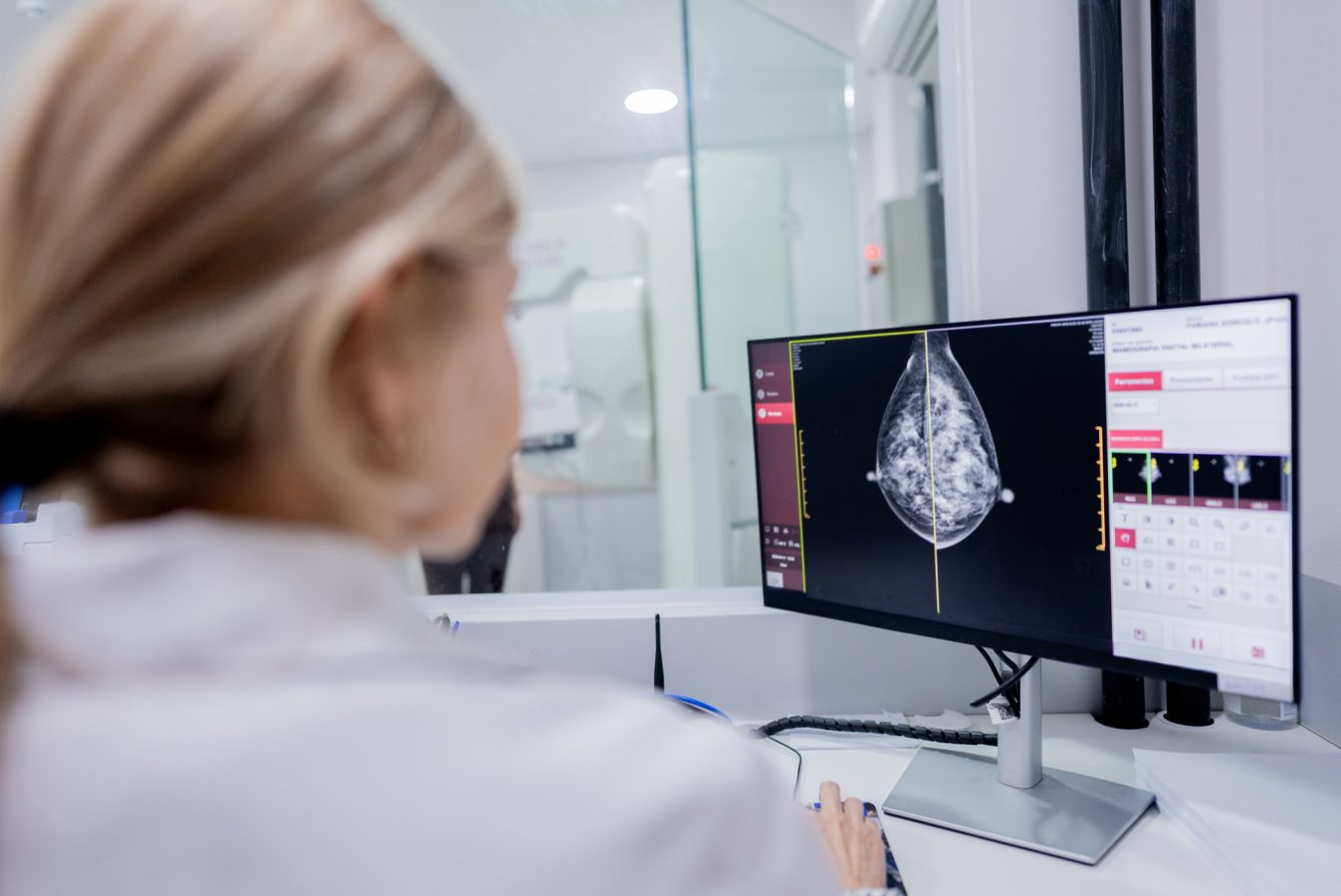
AI-assisted mammography tools can provide radiologists with an additional layer of insight as they evaluate images, helping identify findings that may require further attention. When combined with physician expertise, these tools have the potential to support image interpretation, improve workflow, and strengthen the screening process.
And that’s exactly why Akumin invested in AI-Assisted Mammography. But what excites me most isn’t the technology itself.
It’s what becomes possible when advanced technology and clinical expertise work together.
That efficiency matters for reasons that extend beyond the reading room. If technology helps radiologists interpret studies more effectively, manage growing screening volumes, and focus attention on the cases that need it most, it can help healthcare systems extend specialized expertise to more patients.
That is where AI’s potential becomes especially meaningful—not simply in making interpretation better, but in helping high-quality screening reach more people.
The Technology Is Meaningless if the Patient Never Gets Screened
Healthcare has a long history of breakthrough innovations. Yet even the most advanced technology has limited impact if patients never encounter it.
A patient can’t benefit from a screening they never schedule.
They can’t benefit from an advanced imaging tool that’s unavailable in their community.
And they can’t benefit from clinical innovation if barriers prevent them from accessing care in the first place.
That’s why access remains one of the most important challenges in healthcare today and one we must continue working to solve across the country.
Whether the obstacle is awareness, convenience, availability, geography, uncertainty about when or where to seek care, or difficulty accessing timely follow-up, these barriers can delay screenings and ultimately affect outcomes.
For healthcare providers, the challenge isn’t simply adopting new technology. It’s creating pathways that connect patients to it.
The question isn’t whether innovation matters. Of course it does.
The question is whether we’re ensuring that innovation reaches the people who need it most.
When screening is accessible, convenient, and supported by the right clinical resources, more patients have the opportunity to take charge of their breast health. That’s when technology can do what it was designed to do: support clinicians and help deliver the highest quality care possible.
Technology and Human Expertise Working Together
The future of breast imaging will depend on combining the strengths of technology with the judgment and expertise of physicians.
Radiologists bring judgment and clinical context—integrating the current examination with prior imaging, breast density, patient history, and the implications of recommending recall, additional imaging, or biopsy.
AI brings something different. It can provide additional information, help identify patterns, and support decision-making throughout the interpretation process.
Together, these capabilities can continue to strengthen the screening process.
When technology is used thoughtfully, it enhances expertise rather than replacing it. It helps clinicians focus their attention where it’s needed most and supports more informed decision-making throughout the patient journey.
Most importantly, the goal remains the same: making high-quality care more accessible to the patients who need it.
Looking Ahead
Breast imaging will continue to evolve. AI will continue to advance. New technologies will emerge, and we will undoubtedly see innovations that further transform how we detect and manage breast cancer.
But as we look ahead, I believe we should continue asking a different question.
Not simply, “What can this technology do?”
But, “How can this technology help us better serve patients?”
Because success will never be measured solely by the sophistication of a tool.
It will be measured by the patient who schedules a screening because they had access to one.
The patient whose cancer is detected earlier because clinicians had more information available to them.
The patient who receives timely, high-quality care and a better chance at a positive outcome.
Innovation will continue to reshape breast cancer screening. Our responsibility is to make sure those advances reach the patients they were designed to serve.
Because the true measure of innovation isn’t what the technology can do. It’s what it allows us to do for patients.
Contributors
Dr. Nasir Siddiqui, MBA
Chief Medical Officer
Dr. Siddiqui is a board-certified diagnostic radiologist with over 15 years of experience advancing innovation across imaging, healthcare technology, and clinical operations. He currently serves on the Board of Directors at Learner’s Digest International, a leading provider of continuing medical education. Trained at the University of Pittsburgh Medical Center and Northwestern University, Dr. Siddiqui also holds an MBA from the University of Chicago Booth School of Business. He is recognized for leveraging data, AI, and workflow optimization to enhance access, efficiency, and patient outcomes across imaging services.